
Replacing a sewer line can cost homeowners from $4,000 to $25,0001. This price range varies due to labor, permits, materials, excavation, and fixing the yard. Knowing the costs helps when planning for sewer line replacements.
The cost for skilled labor can be from $4,000 to $25,0001. This depends on the job’s complexity, the needed skills, the pipe’s length, and where it is. Different materials like PVC, Terra-Cotta, ABS, cast-iron, and SDR-35 also affect the price. They impact the line’s durability and how well it works1.
Getting permits for sewer line work can cost $30 to $5001. This price changes based on where you are and the work needed. Digging can cost $50 to $250 per foot1. The depth of the line, which can be 2′ to 30′, also matters. Using trenchless methods can save money by cutting down on labor and yard repair costs1.
Replacing a sewer line for a house costs about $3,500, while businesses pay around $10,4002. Digging up parts of your property can add thousands to the cost of equipment2. Fixing walls or floors can also increase the bill. Minor wall fixes cost around $350, and big ones can be over $2,0002.
Knowing what makes sewer pipe costs high is key for homeowners and business owners. By looking into trenchless options, you might save on labor and yard repair. This can also reduce the disruption to your property.
Key Takeaways
- Sewer line replacement can cost between $4,000 to $25,000, with labor, materials, and excavation being the main cost drivers.
- Trenchless sewer replacement methods can be more cost-effective in the long run, reducing labor and restoration costs.
- The average cost for residential sewer line replacement is around $3,500, while commercial replacements cost around $10,400.
- Factors like pipe type, permit fees, and landscaping restoration can significantly impact the overall sewer line replacement expenses.
- Understanding the cost breakdown and available solutions can help you make informed decisions when budgeting for a sewer line replacement project.
Understanding Sewer Pipe Costs
Sewer pipe installation costs can change a lot. Knowing what affects the price helps you plan better. We’ll look at the main parts that make up the cost.
Overview of Materials and Their Pricing
The material you pick is key to the cost. You can choose from PVC, terra-cotta clay, ABS plastic, cast-iron, and SDR-35. Prices range from $73 for PVC3 to $4,265 for copper3.
The right material depends on durability, how long it lasts, and if it fits with what you already have.
Labor Costs Involved in Installation
Labor costs are a big part of the total price. You need plumbers, excavators, and construction workers for a good job. Costs can be from $4,000 to $25,0004.
Additional Expenses to Consider
There are more costs besides materials and labor. You’ll need to think about permit fees, which can be $30 to $5004. Excavation costs are $50 to $250 per foot4. And there are costs for fixing up your property, like drywall or flooring, repaving, and landscaping3.
Knowing these costs helps you get ready for the money needed for a good sewer system. Talking to a trusted contractor, like Reliant Resources in Franklin, Tennessee, can help a lot.
Types of Sewer Pipes and Their Costs
Choosing the right pipe material for sewer line replacement is key. Sewer pipe materials like PVC, cast iron, and concrete have different costs and benefits. Each option has its own price point.
PVC Pipes
PVC pipes are a top pick for sewer line replacement because they’re affordable. The cost can range from a few thousand dollars to $25,0005. They’re durable, resistant to corrosion, and easy to install, making them a good choice for many.
Cast Iron Pipes
Cast iron pipes last a long time, often decades. But, they’re pricier. The cost can go up to $20,0006. Their durability is a plus, but installation costs add up.
Concrete Pipes
Concrete pipes are strong and last long, best for big sewer systems. The cost varies based on size and installation complexity. It can be from $2,500 to $10,000 on average7.
HDPE Pipes
HDPE pipes are gaining popularity for their flexibility and durability. They’re also resistant to corrosion. HDPE is often cheaper than traditional materials, making sewer repairs more affordable5.
| Pipe Material | Average Cost Range | Key Characteristics |
|---|---|---|
| PVC | $2,500 – $25,000 | Cost-effective, durable, easy to install |
| Cast Iron | Up to $20,000 | Highly durable, but more expensive |
| Concrete | $2,500 – $10,000 | Suitable for larger sewer systems, strength and durability |
| HDPE | Varies | Flexible, durable, corrosion-resistant, often more affordable |

The type of sewer pipe you choose affects the cost of replacement. Homeowners should think about durability, installation costs, and long-term performance. This helps make a smart choice576.
Factors Influencing Sewer Pipe Prices
Several key factors affect sewer pipe prices. Knowing these can help you choose wisely for your sewer system. Let’s look at what makes sewer pipe costs go up or down.
Market Demand and Supply
Supply and demand shape sewer pipe prices. When more people need sewer pipes, prices go up8. But, if demand falls, prices might drop.
Pipe Size and Diameter
The size of the sewer pipe matters a lot. Bigger pipes, from 4 inches to 48 inches or more, cost more9. This is because they need more material and labor to install.
Geographic Location Impact
Where you are affects sewer pipe prices too. Labor costs, local rules, and shipping costs change by area9. Also, how deep the pipe goes can add to the cost.
Knowing these factors helps you plan for sewer pipe costs. Keep up with market trends, pipe sizes, and location details. This way, you can make smart choices for your sewer system.
“Investing in high-quality sewer pipes and professional installation can lead to long-term cost savings by reducing the risk of costly repairs and replacements down the line.”
Quality vs. Price: What You Need to Know
Choosing the right sewer pipe replacement is key. Cheaper options might seem good at first but can cost more over time. This is because they often need more repairs or get replaced sooner.
Think about how long the pipes will last. This affects the cost of owning them.
The Importance of Pipe Durability
Pipe durability is very important for sewer system costs. For example, clay pipes last 50 to 60 years. Cast iron pipes can last up to 100 years. PVC or ABS plastic tubes can last over a century11.
Choosing durable materials may cost more at first. But, it can save a lot of money in the long run.
Long-Term vs. Short-Term Costs
While cheaper sewer pipes might look good, their costs add up over time. The cost to replace a sewer line can be $50 to $250 per foot. This can be $3,000 to $25,000 total, depending on many factors11.
Trenchless sewer repair can save money in Dallas, Texas. It avoids digging and cuts labor costs11. Thinking about the long-term needs of different pipes helps make a better choice.
Choosing quality sewer pipes might cost more upfront. But, it can save a lot of money in the long run. Investing in durable, high-quality pipes can be a wise decision that pays off in the long run.
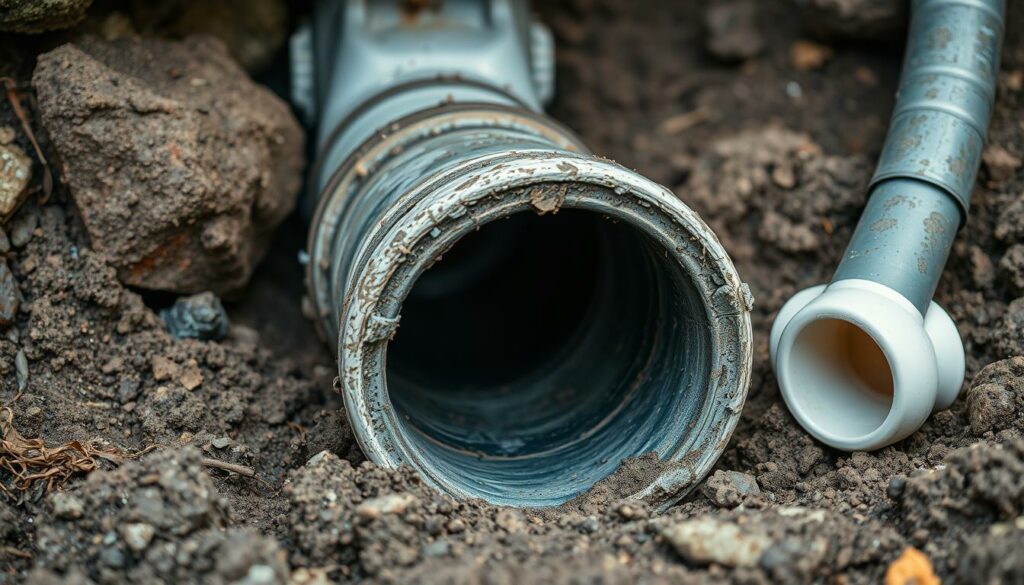
Installation Costs: Beyond the Pipe Itself
Replacing a sewer line costs more than just the pipe. Many important factors can raise the total cost. Homeowners need to think about these extra costs when planning their budget.
Excavation and Site Preparation
Excavation is a big part of the cost. Replacing a sewer line can cost between $3,000 and $8,000. But, for harder jobs, it can go over $10,00012.
Excavation can cost $50 to $250 per foot. This depends on how deep and complex the job is12. Site prep, like fixing landscaping or breaking concrete, can add $2 to $17 per square foot12.
Permit and Inspection Fees
Getting the right permits and following local rules is key. Permit fees can be $30 to $500, based on the project’s size and location12. You might also need to pay for inspections, adding to the total cost.
Knowing about these extra costs helps homeowners plan better. They can make choices that save money in the long run.
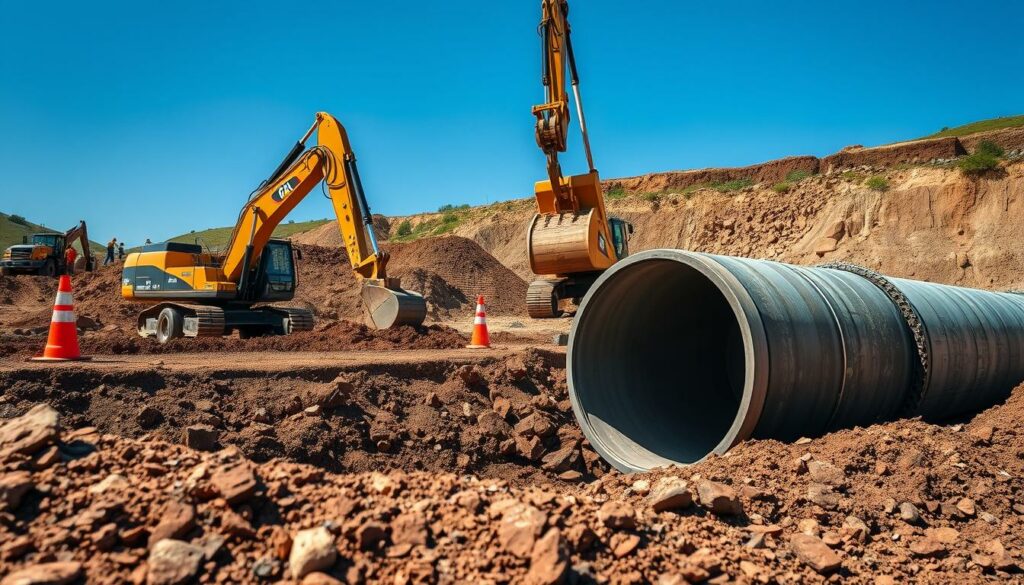
Environmental Regulations Impacting Costs
As a homeowner or contractor, knowing how environmental rules affect sewer pipe replacement costs is key. These rules, set by states and the federal government, can greatly change your project’s cost13.
State and Federal Requirements
Environmental standards at both levels set rules for materials, how to install, and disposal. Following these can mean extra steps, like special tools or training. This can raise both labor and material costs13.
Impact of Environmental Standards
Environmental rules can really up the cost of sewer pipe work14. Sometimes, sewer bills are more than water bills because of these strict rules14. Things like how deep you dig and if you need pump stations can also increase costs14.
| Regulation | Impact on Sewer Pipe Costs |
|---|---|
| Material requirements | Using specific materials, like cast iron, can raise the initial cost but lasts longer13. |
| Installation methods | Some areas might not allow trenchless methods, so you might have to use more expensive open-cut trenching13. |
| Disposal procedures | Correctly disposing of old pipes, especially those with harmful materials, can increase costs13. |
Knowing the environmental rules for your sewer project helps you budget better13. Talking to sewer line replacement experts can guide you through these rules. They ensure your project meets all standards13.
Choosing the Right Sewer Pipe Material
Choosing the right sewer pipe is key. Sewer pipe materials vary in cost, durability, and performance. Knowing the pros and cons helps you pick the best option for your budget and needs.
Pros and Cons of Sewer Pipe Materials
PVC pipes are cheap and resist corrosion15. They’re also light, making installation easier and cheaper16. But, they might not work well in all soils and may not last as long as others.
Cast iron pipes are strong and can last up to 100 years with care16. They cost more but are great for busy areas where durability matters15.
Concrete pipes are strong but can crack and are not always the best value15. HDPE pipes are flexible and durable but can be pricey at first.
Cost-Effectiveness Over Time
Think about the long-term cost when picking a pipe material. PVC might be cheaper at first but consider its lifespan and upkeep16. Cast iron, though pricier initially, can save money over time due to its long life and reliability15.
Knowing the sewer pipe materials and their pros and cons helps you choose wisely. Talking to experts, like Knight Rooter, can guide you to the most cost-effective option for your project.

“Selecting the right sewer pipe material is essential for ensuring the long-term functionality and cost-effectiveness of your plumbing system.”
DIY vs. Professional Installation: Cost Comparisons
Choosing between DIY or hiring pros for sewer line replacement affects your budget. DIY might seem cheaper, but it can lead to more costs later. Professional plumbers have the skills and tools needed. They make sure your sewer system is installed right, following local rules.
Benefits of Hiring Professionals
Plumbers know how to deal with unexpected problems during sewer line replacement. They know the local building codes and get the right permits. This means your project is done safely and legally. Plus, they offer warranties, giving you peace of mind and protection against future problems17.
Risks of DIY Installation
DIY sewer line installation might look cheap at first, but the risks are high. It can cause leaks, code issues, and damage to your property, costing more in the long run18. Without the right tools and knowledge, DIY projects can also be dangerous, leading to injuries or damage to underground utilities2.
Fixing DIY mistakes can cost more than hiring a pro in the first place. For most homeowners, hiring a professional is the better choice. It ensures a sewer system that lasts and meets codes18.
“Sewer line replacement is a complex task that requires expertise and specialized equipment. Attempting a DIY project can lead to costly mistakes that end up costing you more in the long run.”
When deciding on sewer line replacement, think about the costs and benefits of DIY versus hiring pros. The right choice for your home ensures a successful and affordable sewer system.
Importance of Proper Sewer Maintenance
Keeping your sewer system in good shape is key to avoiding big repair costs. Regular sewer maintenance can save you a lot of money by stopping big problems19. Replacing a sewer line the old way can cost $3,000 to $6,000 per foot19. But, new methods like pipe lining or bursting cost only $80 to $250 per foot19.
How Maintenance Can Save Money
Looking after your sewer lines can lower the risk of pipe bursts. This means you won’t need emergency plumbing services, saving you money20. Pipe bursts can cause big repairs and water damage20. Not taking care of your plumbing can also lead to bad smells in your home20.
Regular upkeep can also stop you from needing to replace pipes, saving you money and keeping your pipes working longer20.
Common Maintenance Practices
- Regular inspections to identify potential issues
- Routine cleaning and clearing of sewer lines to prevent clogs
- Prompt addressing of minor problems to prevent them from escalating
Most sewer lines can last 50 to 100 years, needing replacement once or twice in a lifetime21. New methods for replacing sewer lines are cheaper and don’t mess up your property as much21. Using good materials for replacement can make your pipes last up to a century21.
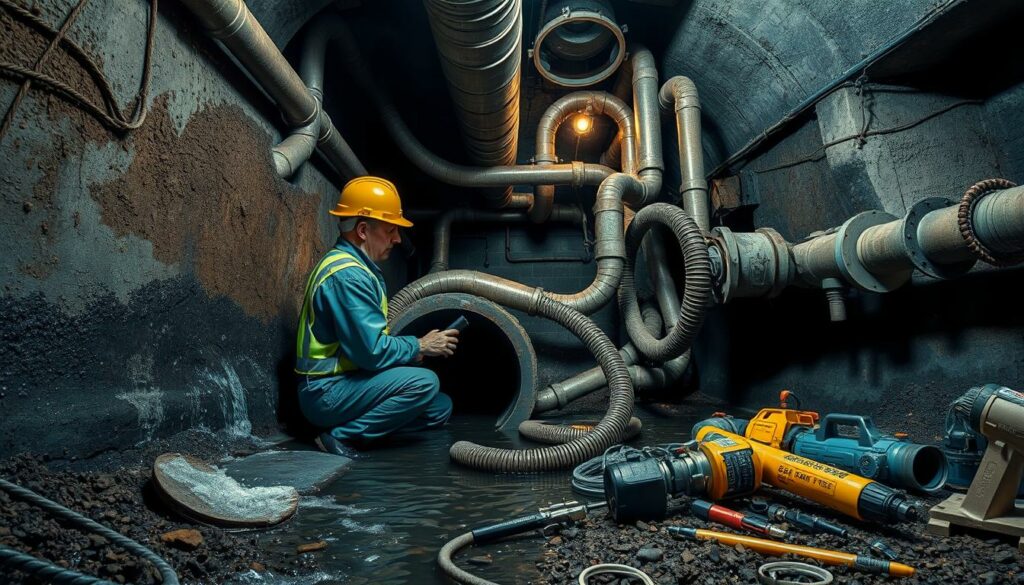
By spending on regular sewer maintenance, homeowners can dodge the high costs and hassle of sewer line troubles. This way, they save money in the long run192021.
“Proper maintenance is the key to a long-lasting and efficient sewer system. Neglecting it can lead to expensive and disruptive issues down the line.”
| Maintenance Practice | Cost Savings |
|---|---|
| Regular Inspections | Identify problems early, prevent costly repairs |
| Routine Cleaning | Avoid clogs and backups, reduce risk of pipe bursts |
| Prompt Repairs | Address minor issues before they escalate, extend system lifespan |
By focusing on preventive care and regular sewer maintenance, homeowners can protect their investment. They avoid the high cost of major sewer system replacements192021.
Alternative Solutions for Sewer Issues
Homeowners often worry about the cost of fixing sewer problems. Luckily, there are cheaper and less invasive ways to fix sewers. Trenchless repair methods like pipe lining and pipe bursting are good alternatives.
Trenchless Repair Methods: A Cost-Effective Solution
Pipe lining creates a new pipe inside the old one without digging. It costs between $80 and $250 per foot19. Pipe bursting replaces the old pipe by bursting it and putting in a new one. It costs between $60 and $200 per foot19.
These methods are cheaper than replacing the whole sewer line. Traditional replacement can cost from a few thousand dollars to $25,0005.
Trenchless methods save money because they don’t need a lot of digging. They also use special tools and skilled workers, which is cheaper than the big equipment and labor needed for traditional methods191.
Repair vs. Replacement: Weighing the Costs
Choosing between fixing or replacing the sewer line depends on the damage. Sometimes, just fixing parts is cheaper than replacing the whole line1. Things like where the sewer is, how long it is, and what method you choose affect the cost19.
Looking at different options and understanding the costs helps homeowners make smart choices. This way, they can save money and keep their sewer system working well1.
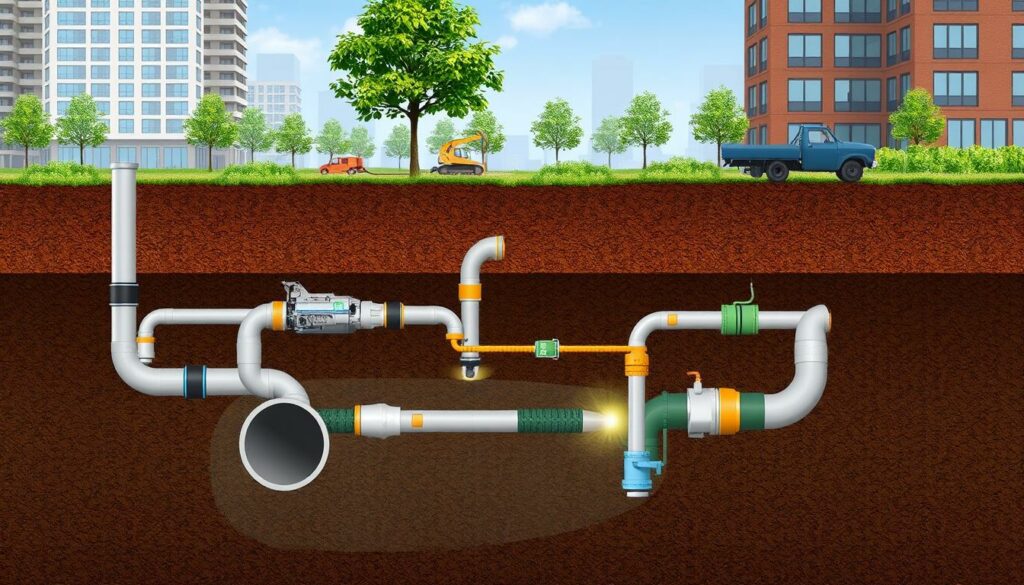
“Trenchless methods are less disruptive and less expensive compared to traditional methods.”
Assessing Long-Term Value in Sewer Pipe Investments
When you invest in sewer pipe replacement, think about the whole cost. This includes the first cost, upkeep, and repair costs later. Better materials might cost more upfront but save money in the long run because they last longer22. A good sewer system also makes your property more valuable when you sell it.
Total Cost of Ownership
Don’t just look at the first cost. Think about all the costs over time. Maintenance, repairs, and how long the pipe are all important23. Choosing wisely can save you money in the long run.
Resale Value Considerations
Good sewer pipes make your property more attractive to buyers. They show the property is well-kept and will last a long time22. This can make your property more appealing when it’s time to sell.
| Sewer Pipe Material | Average Lifespan | Maintenance Requirements | Estimated Resale Value Impact |
|---|---|---|---|
| Vitrified Clay Pipe (VCP) | 100+ years | Low | High |
| PVC Pipe | 50-100 years | Moderate | Moderate |
| Cast Iron Pipe | 75-100 years | High | High |
| HDPE Pipe | 75-100 years | Low | High |
Focus on long-term value, total ownership cost, and property resale to make a smart sewer pipe investment. This ensures it meets your needs for many years.

“Investing in high-quality sewer pipes is a long-term strategy that can pay dividends through reduced maintenance costs and increased property value.”
Future Trends in Sewer Pipe Technology
The sewer pipe industry is set for big changes. New trends aim to make pipes last longer, be better for the planet, and save money. Trenchless technology, like pipe bursting and CIPP lining, is key to this growth The Sewer Line Repair Service Market is expected to hit $7.2 billion by 2032, growing 6.5% yearly from 2024 to 203225.
Innovations Affecting Costs
New tech, like self-healing pipes, could cut down on repair costs. The trenchless pipe market is set to reach $6.48 billion by 2030, growing 5.8% yearly26. These advancements could save a lot for both homeowners and cities, reducing the need for frequent fixes.
Sustainable Materials and Their Prices
Eco-friendly pipe materials are becoming more popular. The Trenchless Pipe Relining Market Size was 70.81 (USD Billion) in 2022. It’s expected to grow to 237.75 (USD Billion) by 2032, with a CAGR of 12.88% from 2024 to 203227. Recycled plastics and new composites are being used as green alternatives. Though they might cost more upfront, their benefits could make them more appealing over time.
FAQ
Why is sewer pipe so expensive?
Sewer pipe costs vary due to several factors. These include the pipe material, installation labor, excavation, and permits. The cost to replace a sewer line can range from ,000 to ,000, based on the project’s complexity.
What types of sewer pipes are available and how do they affect the cost?
Sewer pipes come in materials like PVC, cast-iron, concrete, and HDPE. The type of pipe affects the cost. Each material has its own benefits in terms of durability and ease of installation.
What factors influence the pricing of sewer pipes?
Prices are influenced by demand, pipe size, and location. Larger pipes and areas with high labor costs or strict rules tend to cost more.
How do quality and price compare when choosing sewer pipes?
High-quality pipes may cost more upfront but save money in the long run. They often need fewer repairs or replacements. It’s important to find a balance between quality and cost.
What additional costs are involved in sewer pipe replacement beyond the pipe itself?
Costs include excavation, site prep, permits, and inspections. These can greatly increase the total cost of replacing a sewer line.
How do environmental regulations affect sewer pipe replacement costs?
Regulations can raise costs by requiring specific materials and methods. Following these rules can add to labor and material expenses.
What are the benefits of professional sewer pipe installation compared to DIY?
Professionals offer expertise and follow local codes, saving money in the long run. DIY risks include improper installation and code violations, which can be costly.
How can regular sewer maintenance help reduce long-term costs?
Regular checks and maintenance can extend the sewer system’s life. This avoids expensive repairs or early replacements.
What are some alternative solutions to full sewer line replacement?
Methods like pipe lining and bursting are less invasive and might be cheaper than full replacement. The cost depends on the damage and method chosen.
How does the total cost of ownership factor into sewer pipe investment decisions?
Considering all costs, including installation, maintenance, and repairs, helps evaluate the investment. Higher-quality materials might cost more upfront but offer better long-term value.
What are some emerging trends in sewer pipe technology that could impact costs?
New technologies focus on durability and cost savings. Examples include self-healing pipes and recycled materials. These might be more expensive initially but could save money over time.
Source Links
- Why Is Sewer Line Replacement So Expensive — Cost Factors
- Why Is Sewer Line Replacement So Expensive | Fischer Plumbing
- How Much Does Sewer Line Replacement Cost?
- Reason Behind Sewer Line Replacement is So Expensive
- Reasons Why Sewer Line Replacements So Expensive | Rooter Hero Plumbing
- What Makes Sewer Line Replacement So Expensive?
- Why is Sewer Line Replacement So Expensive? (Keep Your Cost Low)
- 5 Factors That Can Affect Sewer Line Repair Costs
- Why Is Sewer Line Replacement So Expensive? Discover the Surprising Truth!
- Sewer Line Replacement Cost Factors Explained
- FAQ
- How Much Does it Cost to Replace a Sewer Line? | Lex Plumbing
- Factors That Affect Sewer Line Replacement Cost – harriswatermain
- Why is your sewer bill more than your water bill?
- The Advantages and Disadvantages of Sewer Pipe Materials
- Mastering Sewer Pipe Installation: A Professional’s Guide
- How Much Is A Sewer Line Replacement l Mr. Rooter Plumbing
- Cost Comparison: Trenchless vs. Traditional Sewer Line Repair
- Factors That Play into the Expense of a Sewer Line Replacement
- The Importance of Proper Drainage and Sewer Line Maintenance – Ray The Plumber
- Why Is Sewer Line Replacement So Expensive? Learn the Costs
- Sewer installation: Key factors that affect the cost and timeline – AZ Big Media
- Sewer Pipe Repair Costs You Need to Know for 2023
- Wastewater
- Sewer Line Repair Service Market Growth and Future Outlook
- Trenchless Sewer Line Replacement: Revolutionizing Traditional Plumbing Techniques – ProfitDig
- Trenchless Pipe Relining Market Size, Share, Trends & Forecast Report 2032