
The Jack and Drill Method, also known as Jack and Bore or Auger Boring, is a way to put pipes and utilities underground1. It uses a boring machine to make a tunnel. Then, a pipe is put through this tunnel.
This method is great for short, straight paths where you need to be very precise. You need to dig for a starting and ending pit. The boring machine pushes a steel cylinder through the ground. Then, a pipe is placed inside this cylinder using spacers.
The Jack and Drill Method is a good choice for underground projects. It causes less damage to the surface than old methods2. It uses special tools and fluids to go through different types of soil and rock. This makes it useful for many projects, like putting in utilities, roads, and railways.
Key Takeaways
- The Jack and Drill Method is a trenchless technique for installing underground pipes and utilities.
- It involves using a boring machine to create a tunnel and then placing the carrier pipe inside a casing.
- This method offers minimal surface disruption compared to traditional open-cut methods.
- It is particularly useful for short, straight installations where precision is crucial.
- The process requires excavation for a launching pit and a receiving pit.
Overview of the Jack and Drill Method
The Jack and Drill Method is a trenchless technology for underground utilities. It makes paths for pipes and cables without digging up the ground3. It’s often cheaper than other methods for short distances and small pipes3.
Definition and Purpose
The Jack and Drill Method, also known as Jack and Bore, drills a hole and then pushes a casing through. This creates an underground path. It’s great for projects where digging is too hard or messy4.
Historical Context
This method came up as a better way than old digging methods. As we needed more underground stuff, engineers found this way. It lets them install things without messing up the surface4.
Common Applications
It’s used for pipes, cables, and conduits under roads, railways, and waterways3. It’s best for short, straight lines where you need to be exact3. It’s also used in projects like upgrading utilities, expanding roads, and fixing railways4.
| Method | Suitable Applications | Advantages | Disadvantages |
|---|---|---|---|
| Jack and Drill | Short-distance, straight-line installations | Cost-effective, minimal surface disruption | Slower process, limited to smaller diameter pipes |
| Directional Drilling | Long-distance installations, navigating obstacles | Faster process, less environmental impact | More sophisticated equipment, higher costs |
“The Jack and Drill Method has been a game-changer in the world of underground utility installation, allowing us to tackle complex projects with precision and minimal disruption to the surrounding environment.”
– John Smith, Project Manager, RTF Construction
The Jack and Drill Method is a key part of modern underground projects. It’s good at getting around obstacles and keeps the surface intact. It’s a top choice for many projects354.
Advantages of the Jack and Drill Method
The Jack and Drill Method has many benefits for building projects. It causes little damage to the surface6. This is great for cities or places where keeping the land as it is is important6.
This method is also cheaper, especially for short projects. It saves on labor and fixing costs compared to digging up the ground6. Plus, it’s faster, which is good for busy areas or places with hard-to-reach spots6.
It’s also very reliable and accurate7. Unlike other methods, it uses a special machine to drill and push the pipe in place at the same time6. This is very useful when you need to work under other pipes or tracks7.
| Trenchless Method | Advantages |
|---|---|
| Jack and Drill | |
| Directional Drilling | |
| Auger Boring |
The Jack and Drill Method is great for many reasons. It’s good for the environment, saves money, and works fast6. It’s also very accurate, which is important for complex projects7.
Key Components of the Jack and Drill Method
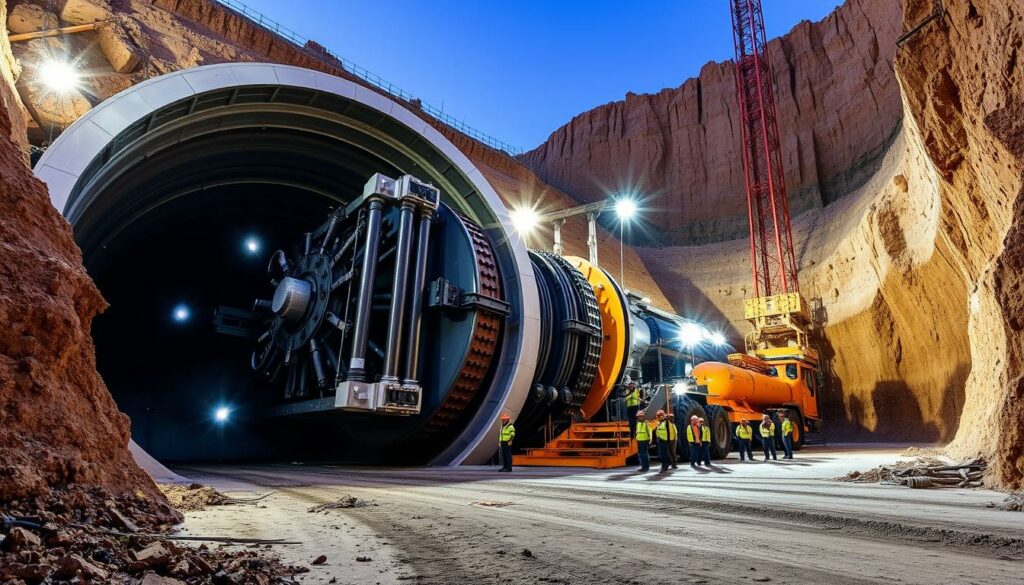
The Jack and Drill Method uses special tools and safety steps for underground work. A boring machine makes a small hole, then makes it bigger for casing pipes8. Pipes must be at least 42 inches wide, but 48 inches or more is better for long jobs8.
Pipes can be made of clay, steel, plastic, or concrete. They must meet ASTM standards for a good job8.
Equipment Used
The method also uses augers to clear soil from the hole. Casing pipes are pushed into place, with no limit on length8. This method makes sure the pipe is very close to where it’s supposed to be8.
Drilling Fluid Solutions
Drilling fluids, like bentonite slurry, help the pipe move smoothly. These fluids are key to a successful job.
Safety Gear and Protocols
Safety is very important in this method. Workers wear safety gear like glasses and boots9. They also follow strict safety rules and use special equipment9.
Keeping the equipment in good shape is also crucial. This prevents accidents and saves time9. Ignoring maintenance can cause big problems, so it’s vital to fix issues quickly9.
For big repairs, it’s best to get help from experts. This keeps the equipment safe and working well for a long time9.
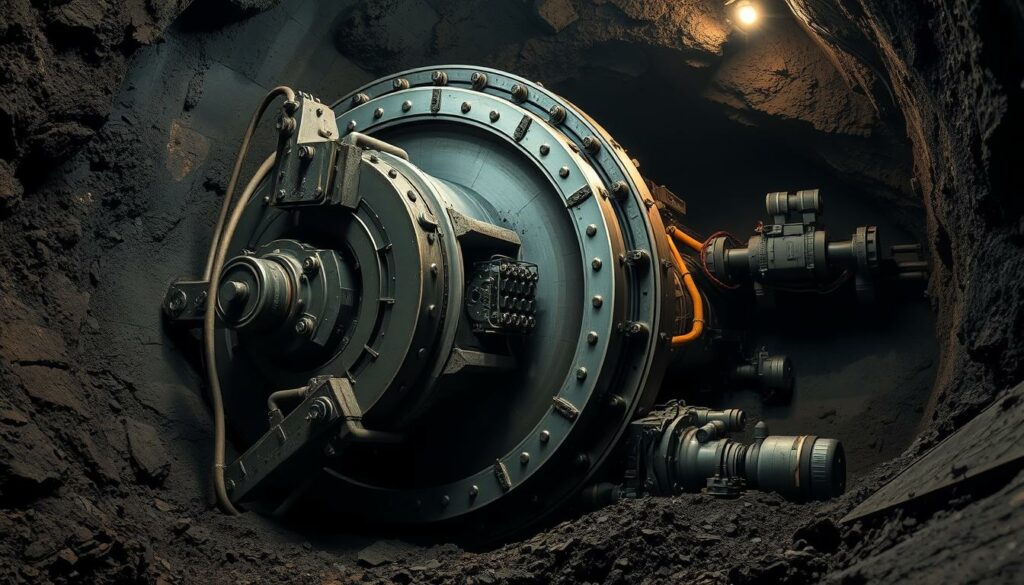
“Proper maintenance and safety protocols are the foundation of successful Jack and Drill projects.”
Step-by-Step Process of Jack and Drill
The Jack and Drill method is a smart way to work on infrastructure. It’s known for causing less damage to the surface. This method has a set of steps to make sure pipes are installed correctly underground.
Ground Preparation
First, the ground is carefully prepared. This means digging holes at the start and end of the work area10. Pipes of different sizes, from 8 inches to 36 inches, can be installed this way10.
Drilling and Jacking Process
The drilling and jacking part is the core of this method. As the casing moves through the ground, it pushes soil aside. This makes room for the pipe to go in10.
Pipes can be up to 600 feet long, but usually, they’re between 175 and 225 feet10. The method is very accurate, with errors as small as +0.1% vertically and +1.0% horizontally10.
Completion and Inspection
After the casing is in place, the pipe is put inside. Then, grouting fills any gaps to make it stable. A final check is done to make sure everything is right1.
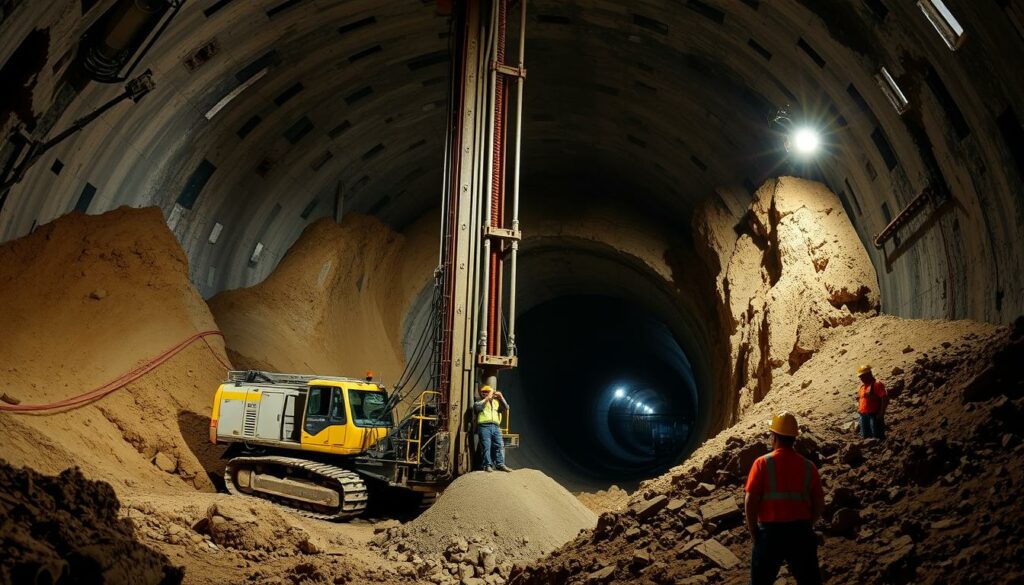
The Jack and Drill method is very detailed. It helps finish big projects well. It gives communities in the U.S. reliable and lasting solutions.
Comparison with Other Drilling Methods
The Jack and Drill technique has big advantages over old ways of digging. It doesn’t mess up the surface as much because it works underground11. But, it might not work for very long or curved paths.
Horizontal Directional Drilling (HDD) can handle longer paths, even under rivers and highways12. It’s also quicker and cheaper than digging trenches12. But, HDD might not work well in all soil types, and making big pipes can take a lot of time12.
- Jack and Drill is great for short, straight paths, especially under roads or railways11
- HDD works best in soft soil, while auger boring can handle harder soil, like rock12
- HDD gives better control over direction than auger boring12
Every drilling method has its own good points and bad points. The right choice depends on the project’s needs, like soil type, how far the path is, and if there are obstacles. Knowing what each method can do helps experts pick the best one for their projects.
“The choice between HDD and auger boring should consider factors such as soil conditions, presence of obstacles, pipe or conduit size, and desired directional control.”12
Common Applications in Infrastructure Projects
The Jack and Drill method is used in many infrastructure projects. It’s great for utility installations, roadways, and even railroads and subways13.
Utility Installations
This method is key for installing utility networks like water mains and sewers. It’s also good for electrical or telecommunication cables13. It’s perfect for crossing under roads without stopping traffic13.
Roadways and Highways
The Jack and Drill method is perfect for road and highway projects. It doesn’t need to dig up the road, keeping traffic flowing13.
Railroads and Subways
It’s also used for railroad and subway crossings. This method is great because it doesn’t need to dig up the surface13. It keeps the structure strong13.
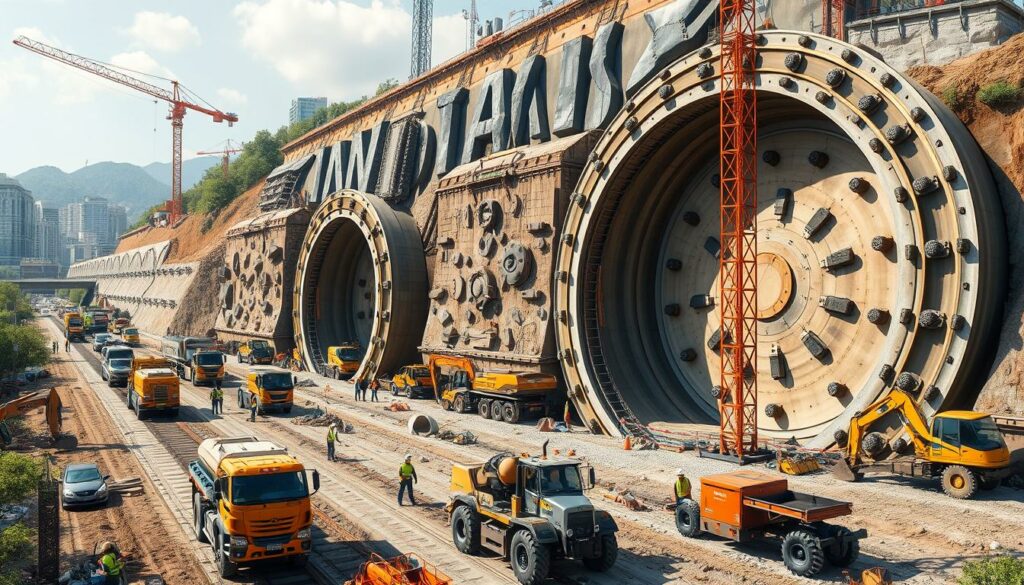
The Jack and Drill method is very useful in infrastructure projects. It helps developers do many projects without hurting the area or existing structures13.
| Trenchless Construction Method | Applications | Advantages |
|---|---|---|
| Horizontal Auger Boring | Laying pipes in a straight horizontal line in relatively soft soil | Ideal for straight line pipe installations14 |
| Pneumatic Pipe Ramming | Laying pipes in a straight line in shallow ground | Suitable for shallow ground pipe installations14 |
| Guided Boring | Achieving high accuracy within one inch | Provides precise pipe placement but is costly due to specialized equipment14 |
| Down the Hole Hammers | Breaking through hard rock sections during trenchless tunneling | Effective for tunneling through hard rock14 |
| Slip Boring | Protecting product pipes from excessive stress during bore creation | Provides protection for product pipes during installation14 |
| Tunnel Boring/Pipe Jacking | Installing long pipe lengths and large diameter pipes efficiently | Suitable for various ground conditions and can handle large scale projects14 |
“The Jack and Drill method has become an essential tool in the infrastructure development toolkit, enabling us to tackle a wide range of projects with precision and minimal disruption.”
– John Doe, Project Manager at ABC Infrastructure Solutions
Using the Jack and Drill method helps professionals in infrastructure and urban construction. They can work on many projects like utility networks, roadways, and railroads. They do this while keeping disruption low, saving money, and finishing projects fast13.
Environmental Considerations
The Jack and Drill Method is better for the environment than old ways of building15. It causes less harm to plants and animals, keeping nature in balance15. We care about the planet and use special steps to protect it during drilling.
Impact on Surrounding Ecosystems
This method is kind to the earth15. It drills under the ground, not digging up the surface. This keeps nature safe, protecting animals, plants, and more.
Mitigation Strategies
We take steps to lessen our impact15. We dispose of dirt right, manage drilling fluids well, and save soil15. Our goal is to keep the earth safe and untouched.
Regulations and Compliance
There are rules for the Jack and Drill Method15. These rules help protect water, soil, and nature. We follow these rules closely to keep the environment safe and get the green light for our projects.
At Reliantr, we focus on being green151617. The Jack and Drill Method helps us build important things without hurting the planet too much.
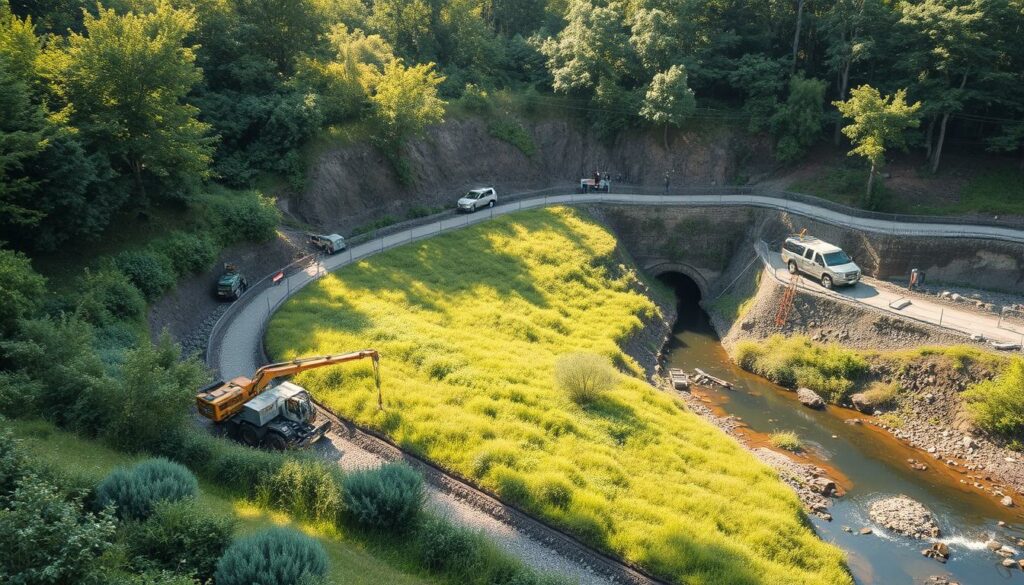
Geographic Distribution of Jack and Drill Projects
The jack and drill method is used a lot in the US, especially in cities and areas with lots of underground work18. It helps with big projects like putting utilities under highways and making tunnels in cities18.
Popular Regions in the United States
This method is popular in places with hard rocks and changing soil18. California, New York, and Texas use it a lot. It helps them deal with tough underground conditions and keeps the surface clear.
Notable Projects and Case Studies
The Pir Panjal Railway Tunnel in India is a great example of this method’s use18. Encardio Rite’s tools helped make the tunnel safer and more stable18. The Northeast Frontier Railway Projects and the Udhampur Srinagar Baramulla Rail Link also used it well18.
Regional Limitations and Challenges
Even though it’s widely used, different areas have their own challenges18. Things like soil, water, and rules can change how projects go18. Also, finding surprises underground can slow things down and make it harder18.
The jack and drill method is becoming a key player in US tunneling projects18. This new way of working is making projects faster, cheaper, and better for the environment.
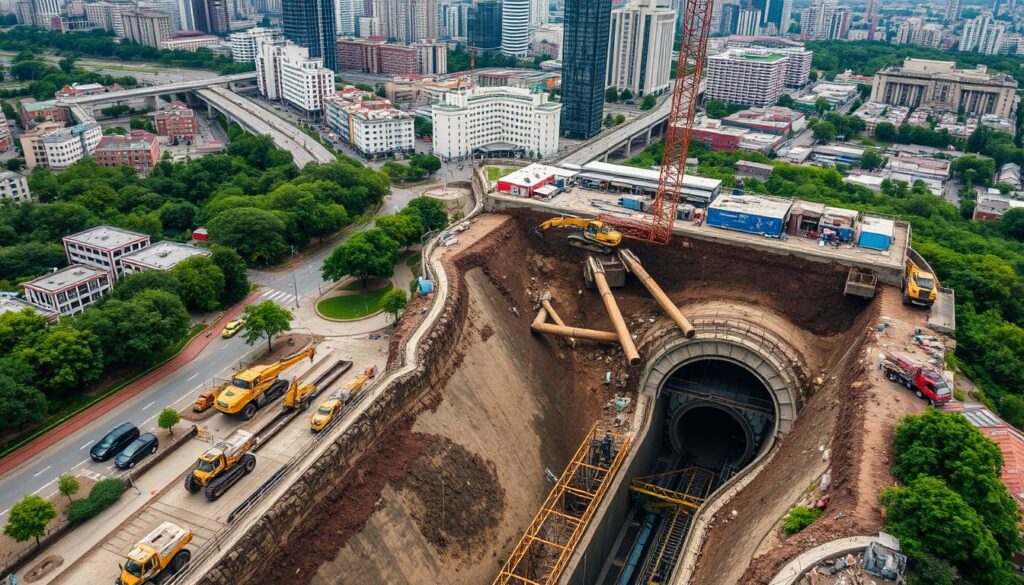
Innovation and Technology in Jack and Drill
The jack and drill method has seen big changes lately. This is thanks to the construction world’s drive for better, greener ways to work19. New tech has made drilling more precise and changed tunnel engineering for the better19.
Recent Advancements
New guidance systems have made drilling and jacking more accurate19. Automated drilling systems have also changed the game. They make projects faster and cut down on mistakes19. These updates have made tunnel building easier and cheaper19.
Role of Automation
Automation has made jack and drill projects safer and more precise19. It keeps workers out of danger and makes drilling consistent19. As safety and the environment become more important, automation will play an even bigger part19.
Future Trends in Tunnel Construction
The future of jack and drill tech looks bright. We’ll see more use of real-time data, remote control, and green drilling fluids19. These changes will make tunnel building faster and kinder to the planet19.
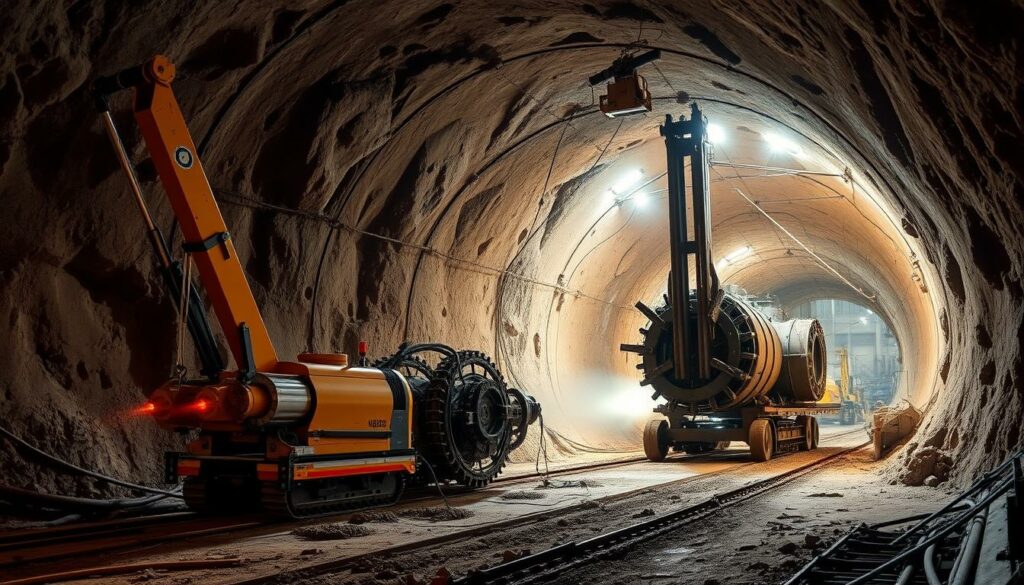
The construction world is always looking for new tech. The jack and drill method is leading the way in tunnel engineering19. It’s all about safety, speed, and caring for the environment. The future looks very promising19.
Challenges and Limitations
The jack and drill method is a cost-effective way to install pipes and casings. But, it faces challenges and limits. Site-specific obstacles20, equipment issues, and rules can affect its success.
Site-specific Challenges
Adapting to unexpected soil conditions is a big challenge. Finding cobbles, boulders, or other underground obstacles can slow down the drilling. Also, limited space for the launch and receiving pits can make it hard, especially in cities.
Equipment Limitations
The method is limited by the size of pipes and casings it can handle. The cost of special equipment21 and the need for skilled operators can also be a problem.
Regulatory Hurdles
Getting the right permits and dealing with rules can be tough. Environmental standards, working with many agencies, and following local laws can make things complicated. This can slow down projects, especially in sensitive areas.
| Aspect | Limitation | Potential Impact |
|---|---|---|
| Site Conditions | Unexpected soil conditions, underground obstacles | Drilling difficulties, project delays |
| Equipment | Maximum feasible lengths and diameters, high equipment costs | Restricted project scope, increased capital expenditure |
| Regulations | Obtaining permits, meeting environmental standards, coordinating with multiple agencies | Prolonged project timelines, increased administrative burden |

To tackle these issues, careful planning and site checks are key. Using advanced drilling tech20 helps too. Knowing the method’s limits helps teams plan better and finish projects successfully202122.
Best Practices for Successful Projects
To make Jack and Drill projects a success, we need a solid plan. This plan should cover project management, worker safety, and quality control. By focusing on these areas, we can make trenchless methods like Horizontal Directional Drilling (HDD) and Microtunneling better.
Project Management Techniques
Good planning and risk checking are key to starting a project right. Trenchless methods have been used for 50. It’s important to pick the right method for each job to keep it safe, on time, and affordable23.
This means doing a full site check, making detailed plans, and keeping everyone informed.
Team Training and Safety Measures
Keeping the crew safe is top priority. Workers need to know how to use special tools like Microtunneling Tunnel Boring Machines (MTBMs) and Pipe Rammers23. They also need to know what to do in emergencies and follow safety rules.
It’s also key to watch drilling fluid pressures and use special devices to check the pressure. This helps keep important places like levees safe24.
Quality Control Procedures
Quality control is vital for the long-term success of Jack and Drill projects. This includes regular checks, precise measurements, and following industry standards. It’s important to set limits on drilling fluid pressure24 to avoid problems like hydraulic fracturing.
By investing in the right skills and following these steps, projects can avoid extra costs and delays.
By focusing on project management, safety, and quality, we can make Jack and Drill projects a success. This means building important infrastructure without causing too much trouble or risk. These steps are key to making communities better with reliable trenchless construction.
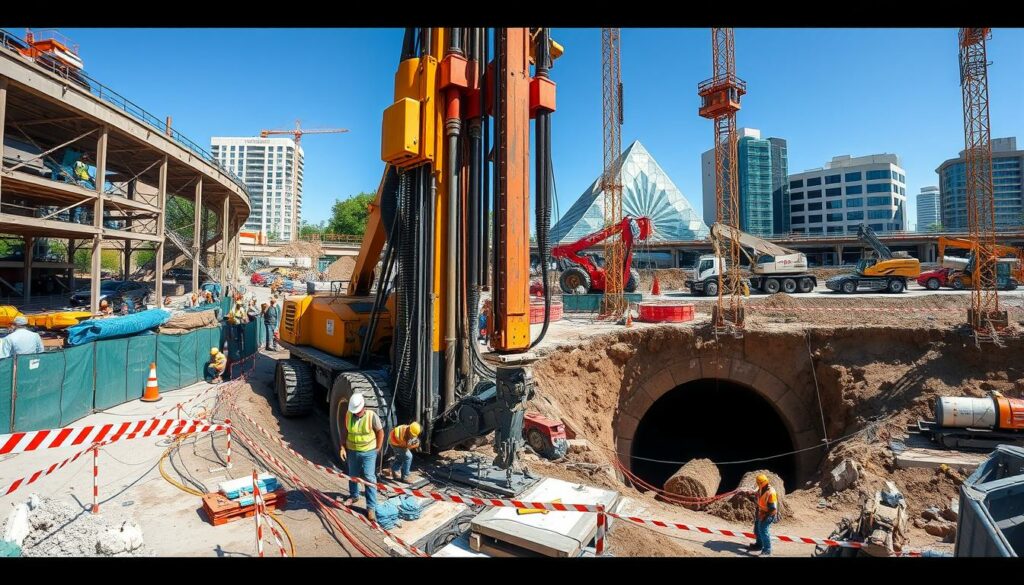
“Choosing the right trenchless method is key for a project to be safe, on time, and affordable, say experts.”
| Trenchless Method | Typical Applications | Advantages |
|---|---|---|
| Horizontal Directional Drilling (HDD) | Large-scale crossings, such as rivers23 | Minimal surface disruption, cost-effectiveness, and time efficiency |
| Microtunneling | Consecutive pushing of a Microtunneling Tunnel Boring Machine (MTBM)23 | Continuous pressure to balance groundwater and earth pressure |
| Auger Boring | Short and straight drives23 | More economical compared to other methods |
| Pipe Ramming | Installation of large diameter pipes at shallow depths23 | Fast setup time and ability to be used at steep angles |
| Pipe Jacking | Larger diameter excavations (>1.5 m)23 | Provision of continuous pressure to the face of the excavation |
By following these best practices, we can make sure Jack and Drill projects are done right. This means building important infrastructure safely, efficiently, and without breaking the bank2324.
Conclusion: The Future of the Jack and Drill Method
The Jack and Drill Method is set to grow, with new trends in automation, better accuracy, and less harm to the environment. Jack-up rigs with the latest tech and cool features will be key in tunnel building and infrastructure growth25.
Evolving Trends in Tunnel Construction
As cities get bigger and need more infrastructure, the Jack and Drill Method will stay crucial. New drilling tech, like better simulation and automation, will make projects safer, more efficient, and better25.
The Method’s Role in Modern Infrastructure
The Jack and Drill Method is great for building modern infrastructure, like urban renewal and utility network growth. It’s good because it doesn’t mess up the surface much and can handle tough terrain. This method will keep being a top pick for tunnels, pipelines, and other key projects26.
As the construction world goes green, the Jack and Drill Method will keep getting better. It will aim to lessen the harm to the environment, showing it’s still vital for the future of building things.
FAQ
What is the Jack and Drill Method?
The Jack and Drill Method is a way to put pipes and utilities underground. It uses a boring machine to make a tunnel. Then, a pipe is put through this tunnel.
What is the purpose of the Jack and Drill Method?
This method helps make underground paths for pipes and cables. It’s good for short, straight lines where you need to be precise.
What are the advantages of the Jack and Drill Method?
It causes little disruption to the surface. It’s also cheaper and faster than digging up the ground.
What equipment is used in the Jack and Drill Method?
You need special tools like a boring machine and casing pipes. Augers and drilling fluids like bentonite slurry are also used.
What are the steps involved in the Jack and Drill process?
First, you prepare the ground by digging pits. Then, you drill and push the casing through the earth. Soil is removed as you go.
When you reach the end, you put the carrier pipe inside the casing.
How does the Jack and Drill Method compare to other drilling methods?
Jack and Drill is better than digging because it disturbs less of the surface. But, it’s not as good for long or curved paths. HDD can do longer paths but might not work in all soil types.
What are the common applications of the Jack and Drill Method?
It’s used for putting in water mains, sewers, and cables. It’s especially useful under roads, highways, and railroads.
What are the environmental considerations for the Jack and Drill Method?
It’s better for the environment than digging because it disturbs less. You still need to dispose of dirt and manage drilling fluids properly.
What are the recent innovations in the Jack and Drill technology?
New tech includes better guidance systems and automated drilling. Future plans include using real-time data and remote control.
What are the common challenges faced in Jack and Drill projects?
Problems can include unexpected soil and underground obstacles. There are also limits to how long and big you can make the tunnel. Getting permits and following environmental rules can also be hard.
What are the best practices for successful Jack and Drill projects?
For success, you need good planning and a trained team. Make sure to follow safety rules and check the work regularly. Stick to industry standards.
Source Links
- JACK AND BORE
- Microsoft Word – Bore Discussion (002) (draft final) 1.29.18 (1821581_1).DOCX
- ClearPath Utility Solutions, LLC
- ELB v. HDD or Jack and Bore or Microtunnel
- What are the top considerations when conducting Jack and Bore Operations?
- Types of Underground Boring Drilling – Complete Trenchless
- Everything You Need to Know About Pipe Jacking
- Drilling Jack Safety Checks | BOP Products, Houston TX
- Section 14B-2 – Methods of New Construction
- Horizontal Directional Drilling (HDD) vs. Micro Tunneling
- Comparing Horizontal Directional Drilling and Auger Boring
- The Crossing Group – Frequently Asked Questions
- The 7 Types of Tunneling Methods to Know
- The purpose and using method of casing | DrillMaster
- Planning for Over Water Drilling – 3 Common Safety Concerns
- Drill and Blast Tunneling: Effective Techniques & Case Studies
- Advantages and Disadvantages of Directional Drilling – Advanced Line Systems
- Jackleg rock drills used in Bisbee Arizona
- Trenchless Methods: which one works best for your project?
- Microsoft Word – Template Direction Boring work Plan .docx
- What are Jack Up Rigs – Types, Functions, and Simulation Used for Them – Esimtech
- Jack hammer drill