
In the world of underground construction, two big players are microtunneling and Horizontal Directional Drilling (HDD). Both trenchless methods aim to reduce surface disruption. But they differ a lot in accuracy, cost, and use1.
Microtunneling is super precise, with an accuracy of +/- 10mm. It’s great for projects needing high precision, like gravity sewers and big pipelines1. HDD, on the other hand, is less precise, with an accuracy of +/- 100mm1.
HDD is faster because it starts from the surface and doesn’t need pits. But, it can lead to weak spots in the pipeline, raising maintenance costs and failure risks. Microtunneling, with its straight design, is more reliable. It has lower maintenance costs and fewer failure risks over time1.
Key Takeaways
- Microtunneling offers higher precision, with an accuracy of +/- 10mm, making it suitable for projects requiring extreme precision.
- HDD averages an accuracy of +/- 100mm, making it less precise compared to microtunneling.
- HDD projects can be completed relatively quickly, as they are surface-launched and do not require pits for boring.
- Microtunneling projects require shafts to be dug at each end of the pipeline, contributing to higher upfront costs.
- Microtunneling’s rigid, straight design offers greater pipeline integrity, resulting in lower maintenance costs and a lower risk of failure in the long term.
Understanding Microtunneling
Microtunneling is a precise way to install pipes. It uses a remote-controlled machine to make pipes from 4 to 12 feet wide2. This method is great for long, accurate runs, staying within ~10mm of the target2.
Definition and Overview
Microtunneling is a way to build sewers without digging. It uses a special machine controlled from above2. During the boring, water jets clear out dirt2.
Key Applications
Microtunneling is used for sewers, water lines, and telecom cables2. It’s perfect for cities and places where digging is hard2.
Advantages of Microtunneling
- It’s safer for workers because they’re above ground2
- Projects finish faster2
- It keeps the area clean and protects the environment2
- Works well in tough ground like sand and rocks2
- Prevents water from getting in the system2
The MTBM uses lasers and cameras for exact guidance. This makes it a top choice for many projects2.
“Microtunneling is one of the three most common trenchless methods for pipe installation3. It involves the use of a tunneling machine that advances through the earth by being pushed by jacks, with pipe installation achieved by placing a piece of pipe rated for jacking forces into the bore created by the tunneling machine3.”
While HDD is cheaper and faster, microtunneling is more reliable2. HDD is less precise and might cost more to maintain. Microtunneling is better for long-term projects2.
Exploring Horizontal Directional Drilling (HDD)
Horizontal Directional Drilling (HDD) is a trenchless method that saves money on underground projects. It’s different from microtunneling because it only needs two shafts. This makes it a top pick for many projects.
Definition and Overview
HDD uses remote-controlled boring to lay pipes and cables underground. It doesn’t need big digs. It’s great for putting in pipes for water, gas, and sewers, and for cables4.
Common Uses
- Installing water, gas, and sewer pipelines
- Placing cables for phones and electricity
- Going under rivers, roads, and railroads
- Drilling through hard ground
Advantages of HDD
HDD can drill deep and stay on track well4. It needs fewer workers and less cleanup than microtunneling4. It’s also cheaper, which helps keep project costs down5.
HDD works for many types of utilities4. It’s good for projects where precision isn’t as important. This includes hard ground conditions4.

“HDD installations can reach depths of more than 50 meters without the need for digging deep shafts or large pits.”5
Unlike microtunneling, HDD can go much farther45. It’s perfect for long projects. This makes it a smart choice for some jobs45.
Both HDD and microtunneling have their good points and bad points. The right choice depends on the project and budget45.
Comparing Construction Methods
When it comes to trenchless construction, the tools used in microtunneling and HDD are key. They affect how well and fast each method works6.
Equipment Used in Microtunneling
Microtunneling uses a special machine called the Micro Tunneling Boring Machine (MTBM). This machine is guided by lasers and can be controlled from a distance. It’s made for straight lines and can be very accurate, up to +/- 10mm over 120m6.
The MTBM comes with a system for pushing the pipe through and another for removing soil. This makes underground work smooth and controlled.
Equipment Used in HDD
HDD uses a drilling rig, drill bits, and a guidance system. It’s more flexible and can change the pipe’s path to avoid obstacles. But, it’s not as precise as microtunneling, with an error rate of +/- 100mm6.
The HDD process starts with drilling a pilot hole. Then, it enlarges the hole and pulls back the pipe. This method is good for avoiding existing structures.
Both methods use special tools for remote control. But, microtunneling’s equipment is more complex and costly than HDD’s6.
| Metric | Microtunneling | HDD |
|---|---|---|
| Drive Length | Up to 1000ft7 | Up to 700ft7 |
| Accuracy | +/- 10mm over 120m6 | +/- 100mm6 |
| Suitability for Urban Areas | Ideal, only requires shaft-to-shaft installations6 | Requires suitable exit points and excavation, poses higher risk to existing infrastructure6 |
| Equipment Complexity | More complex and expensive6 | Generally less complex and expensive6 |
The choice between microtunneling and HDD depends on the project’s needs and site conditions. Knowing what each method can do helps construction experts make the right choice for their projects67.

Soil Conditions and Environmental Impact
Soil conditions are key in choosing underground construction methods. Microtunneling works well in unstable soils like sand, silt, or clay. It uses a slurry system to keep the tunnel stable8. But, it can be tough in mixed soil or where there are boulders9.
Horizontal directional drilling (HDD) is great for many soil types, including rock and clay9. It’s not as good in loose soils like sand and gravel9. Both HDD and microtunneling are good for the environment because they disturb the surface less. HDD usually moves less soil than microtunneling8.
Microtunneling in Various Soil Types
Microtunneling’s slurry system helps it handle unstable soils well. It keeps the tunnel stable in sandy, silty, or clayey soils9. But, it can be tricky in mixed soil or with boulders, needing careful planning.
HDD’s Performance in Challenging Conditions
Horizontal directional drilling is flexible and works in many soil types, like rock and clay9. It might have trouble with loose soils like sand and gravel. But, HDD is a strong option for many underground projects9.

“Trenchless technologies like HDD and microtunneling minimize the need for extensive post-installation surface restoration, saving time and costs.”
Cost Comparison
When we talk about underground construction, microtunneling costs more at first than horizontal directional drilling (HDD)10. This is because microtunneling needs special tools and a bigger team. The fancy machines and control systems add to the cost10. HDD, on the other hand, starts cheaper because it uses simpler tools and a smaller team.
But, over time, microtunneling is cheaper10. It’s more precise and stable, which means less upkeep and fewer problems later10. HDD might seem cheaper at first, but it could cost more in the long run because of possible weak spots in the pipe.
Initial Investment
| Construction Method | Initial Investment |
|---|---|
| Microtunneling | Higher due to specialized equipment and larger crew sizes |
| Horizontal Directional Drilling (HDD) | Lower due to less complex equipment and smaller crew sizes |
Long-Term Costs
- Microtunneling often has lower maintenance costs and reduced risk of failure over time due to its precision and stability10.
- HDD may incur higher long-term maintenance costs due to potential weak points in the pipeline caused by bends in the installation process.
“Trenchless technologies like microtunneling and HDD offer long-term economic benefits and durability, even if the initial cost is higher compared to traditional open excavation methods.”10
In summary, microtunneling might cost more at first, but it’s cheaper in the long run. It’s also less likely to have problems. Trenchless methods like microtunneling and HDD balance the cost of starting with the savings later. This makes them a good choice for many projects.
Project Duration
When it comes to underground construction, how long it takes is very important. Studies show that Horizontal Directional Drilling (HDD) is faster than Tunneling methods like Augering and11. HDD projects usually finish about 75% of the time they’re expected to, while Tunneling projects finish about 60% of the time11.
Typical Timeframes for Microtunneling
Microtunneling projects take longer because of the need for shafts and complex setup. The detailed work can also make projects longer. But, pipe jacking can make on-site work faster12.
Typical Timeframes for HDD
HDD projects are quicker, especially for small pipes and good soil. It doesn’t need big pits, making it faster11. Direct Pipe is even faster, finishing 20% quicker than old methods11.
| Method | Typical Crossing Distance | Maximum Achievable Length |
|---|---|---|
| Conventional Boring | 50 to 60 feet | 400 feet in ideal soil conditions |
| Horizontal Directional Drilling (HDD) | N/A | Just under 7,000 feet |
| Direct Pipe | N/A | Shorter and shallower than HDD due to continuous casing |
How long Microtunneling and HDD projects take can change a lot. It depends on pipe size, length, and soil. HDD can have problems like fluids coming back up and holes collapsing12. The longer the HDD, the more likely it is to fail12.
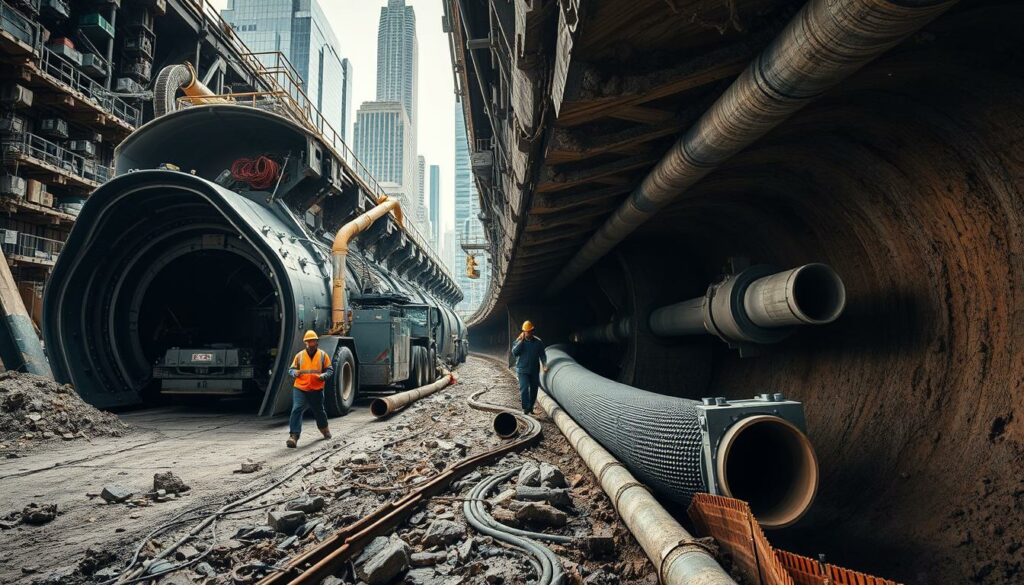
“Trenchless methods have been used for the last 50 years, indicating a long history and established use within the industry. Advancements in technology for excavation and guidance systems have made trenchless technologies increasingly common worldwide, showcasing a growth trend in the industry.”13
Knowing how long Microtunneling and HDD projects take helps managers plan better. They can make schedules that fit their underground projects well111213.
Risk Factors and Challenges
Understanding the risks of underground construction methods like microtunneling and horizontal directional drilling (HDD) is key for success14. Both methods have benefits but also risks that need careful handling.
Risks Associated with Microtunneling
Microtunneling projects might face risks like equipment failure, unexpected ground issues, and surface settlement14. But, microtunneling’s precise control and support help reduce these risks. It’s a solid choice for installing pipelines without digging.
Risks Associated with HDD
HDD projects have their own set of challenges. These include the risk of drilling fluid spills, damage to the pipeline, and hitting underground utilities15. HDD’s less precise nature can also cause the pipeline to deviate, leading to long-term problems.
To lessen risks in both microtunneling and HDD, careful planning and skilled operators are vital15. Knowing the specific challenges of each method helps teams make better decisions. This ensures underground projects are completed successfully.
“Proper planning, geotechnical investigation, and correct installation methods are crucial for trenchless projects, as losses in case of failure can be significant.”15
Regulatory Considerations
When it comes to pipeline installation, both microtunneling and Horizontal Directional Drilling (HDD) need permits. This ensures they follow local rules and protect the environment16. But, the permits needed can vary between these two methods17.
Permits for Microtunneling Projects
Microtunneling projects need permits for access shafts, dewatering, and soil disposal17. They also have to meet strict alignment rules. This is good for areas with sensitive underground or environmental protection.
Permits for HDD Projects
HDD projects need permits for drilling fluids, especially near waterways or utilities17. They also might need extra permits for environmental protection against drilling fluid leaks17.
Even with these needs, microtunneling and HDD need fewer permits than open-cut methods16. This is a big plus for projects with limited access or sensitive areas.
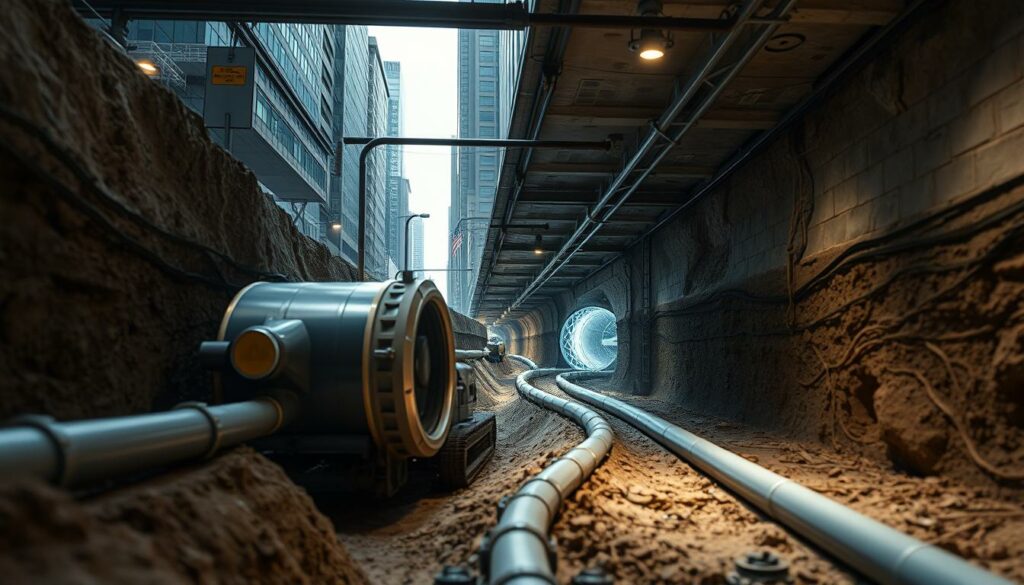
| Permit Requirements | Microtunneling | HDD |
|---|---|---|
| Shaft Construction | Yes | No |
| Dewatering | Yes | No |
| Soil Disposal | Yes | No |
| Drilling Fluid Management | No | Yes |
| Waterway Crossing | No | Yes |
| Existing Utility Protection | No | Yes |
In summary, both underground construction methods and trenchless technology must think about rules and permits. But, the exact permits needed can change based on each pipeline installation project’s details1617.
Case Studies: Successful Applications
The use of underground construction methods like microtunneling and horizontal directional drilling (HDD) is seen in many projects around the world. These methods have changed how we build infrastructure. They do this by causing less damage to the surface and the environment18.
Notable Microtunneling Projects
Microtunneling has helped build big sewer systems in crowded cities and under rivers. The Coxwell Bypass Tunnel in Toronto, Canada, is a great example. It’s a 10.5-kilometer-long, 6.3-meter-diameter tunnel built using microtunneling18.
This method made it easy and didn’t disturb much. It shows how well microtunneling works in tough places.
Impressive HDD Achievements
Horizontal directional drilling (HDD) has shown its strength in long and hard pipeline projects. A 15,000-foot crossing of the Chesapeake Bay for a fiber optic cable is a big win for HDD18. It proves HDD can handle tough jobs in different places.

“Trenchless technology solutions, such as microtunneling and HDD, have revolutionized the way we develop critical infrastructure, minimizing disruption and environmental impact.”
Both microtunneling and HDD have changed communities for the better. They show how new underground building ways can solve big problems19. These examples show we’re moving towards better, greener ways to build, thinking about people and the planet19.
Choosing the Right Method for Your Project
Choosing the right underground construction method is key. It depends on many things like project needs, soil type, budget, and future plans. Trenchless technology has changed how we install and fix pipelines. It offers fast and affordable ways to do it.
Factors to Consider
When picking between microtunneling and HDD, think about accuracy, pipe size, length, soil, and budget. Microtunneling is great for precise work, big pipes, and sewers. It can be very accurate, within +/-10mm1.
HDD is better for pressure pipes, long distances, and when some flexibility is okay. It’s less accurate, about +/-100mm1.
When to Use Microtunneling
Microtunneling is best when you need to avoid disrupting areas. It works well in cities or where soil is unstable, like sandy or clay soils20. It can also go over a mile long20.
But, it costs more upfront and takes longer than HDD1.
When to Use HDD
HDD is good when you want to save money. It can handle pipes from 2 to 48 inches20 and goes from 600 to 1800 feet20. It’s faster because it starts from the surface, but might have more long-term risks1.
Microtunneling, on the other hand, is more reliable and costs less to maintain1.
Choosing between microtunneling and HDD depends on your project’s needs, budget, and future costs. Our experts can help pick the best method for your project’s success.
FAQ
What is the difference between microtunneling and horizontal directional drilling (HDD)?
Microtunneling and HDD are both used for installing pipelines. Microtunneling is very precise, within 10mm of the line. It’s great for big pipes and gravity sewers. HDD is cheaper and works well in many soils, but it’s less precise, about 100mm off.
What is microtunneling and what are its key applications?
Microtunneling is a precise method using a special machine. It’s perfect for long, accurate tunnels. It’s used for sewers, water mains, and telecom lines, up to 12 feet in diameter.
What is horizontal directional drilling (HDD) and what are its common uses?
HDD is a cost-effective method for underground utilities. It’s used for gas, water, and cable pipes. It’s great for long, straight tunnels in stable ground.
What equipment is used in microtunneling and HDD?
Microtunneling uses a laser-guided machine and a jacking system. HDD has a drilling rig and a guidance system. Both need special equipment, but HDD’s is simpler and cheaper.
How do microtunneling and HDD perform in different soil conditions?
Microtunneling works well in unstable soils with its slurry system. But, it struggles with mixed grounds or boulders. HDD is good in many soils, but not in loose or poorly consolidated ones.
What are the cost considerations for microtunneling and HDD?
Microtunneling costs more upfront due to special equipment and crew size. But, it saves on maintenance costs. HDD is cheaper initially but might cost more in the long run due to potential pipeline weaknesses.
How do the project timelines differ between microtunneling and HDD?
Microtunneling takes longer because of shaft construction and setup. But, pipe jacking can speed up on-site work. HDD is faster, especially for small pipes and good soil, as it doesn’t need big pits.
What are the key risks and challenges associated with microtunneling and HDD?
Microtunneling risks include machine failure and unexpected soil. But, its control and support reduce these risks. HDD risks include spills, pipe damage, and utility strikes. Its less precise nature can cause path deviations and long-term issues.
What are the regulatory considerations for microtunneling and HDD projects?
Microtunneling needs permits for shafts, dewatering, and soil disposal. HDD requires permits for drilling fluid, crossing waterways, and utilities. Both need less permits than open-cut methods due to less surface disruption.
Can you provide examples of successful microtunneling and HDD projects?
The Coxwell Bypass Tunnel in Toronto is a microtunneling success. It’s a 10.5-kilometer, 6.3-meter diameter tunnel. HDD successfully crossed the Chesapeake Bay for a fiber optic cable, showing its long-distance capability.
How do you choose between microtunneling and HDD for a specific project?
Choose based on project needs, soil, budget, and long-term costs. Microtunneling is for precise, large pipes and sewers. HDD is for pressure pipes, long distances, and when cost matters. Consider maintenance, environment, and regulations too.
Source Links
- Microtunnelling and HDD – what’s the difference? – Edge Underground
- Understanding Microtunneling: Trenchless Technology Guide | SEKISUI SPR Americas, LLC
- ELB v. HDD or Jack and Bore or Microtunnel
- Horizontal Directional Drilling (HDD) vs. Micro Tunneling
- Busting myths in the HDD industry – Utility Magazine
- No room for error: microtunnelling vs HDD considerations – Edge Underground
- What’s the difference between microtunneling vs. guided boring?
- Why is horizontal directional drilling better for the environment?
- Pipe Boring vs Microtunneling – Everything You Need to Know
- Paper Title (use style: paper title)
- The Crossing Group – What is Trenchless Construction?
- Comparison of Pipeline Drilling Methods: Bores, HDDs & Direct Pipes [Gaille Energy Blog Issue 75]
- Trenchless Methods: which one works best for your project?
- Planning a Bore For a Trenchless Project? Here Are 5 Important Factors to Consider
- 4. Reducing Pavement Cuts by Integrating Technology – Pavement Utility Cuts – Publications – Utility Program – Design
- (EJBMÄ£°å.pdf)
- HDD vs Microtunneling | Pros and Cons of Each Method