

Trenchless water line replacement is a new way to fix old or broken water lines. This method doesn’t need a lot of digging in your yard. It can be done in just a few hours, so it won’t mess up your day1.
This method is also cheaper, faster, and uses strong materials for a long-lasting fix1.
There are two main ways to do this: pipe bursting and pipe lining1. Pipe bursting breaks the old line and replaces it. Pipe lining puts a new, flexible line inside the old one, using epoxy to seal it1.
Trenchless tech works for many types of pipes, from small to very large1.
This method is good because it’s cheaper, doesn’t mess up your yard, and is kind to the environment1. It’s also less damaging than digging, so your yard stays nice1. Plus, the strong materials used can save you money on future fixes1.
Key Takeaways
- Trenchless water line replacement is a more efficient and less disruptive alternative to traditional pipe installation methods.
- Two primary trenchless techniques are pipe bursting and pipe lining, each with its own advantages.
- Trenchless methods can be completed in a matter of hours, minimizing the impact on your property and daily routine.
- Trenchless water line replacement is a cost-effective solution that utilizes durable materials for long-lasting results.
- Choosing an experienced and licensed plumbing company is crucial for ensuring quality service and successful job completion.
Understanding Trenchless Technology
Trenchless technology is a new way to fix and replace underground pipes without digging up the ground. It uses small holes to work on pipes, keeping the surface intact. This no-dig technology is cheaper, better for the environment, and faster than old methods for fixing pipes underground2.
Definition of Trenchless Technology
Trenchless technology is a set of methods for fixing or replacing underground pipes without digging. It aims to lessen harm to the environment, reduce disruptions, and cut costs compared to old ways2.
How It Differs from Traditional Methods
Trenchless and old methods differ in how they affect the surface. Old methods dig up a lot, damaging yards and driveways. Trenchless uses special tools and small holes to fix pipes without harming the surface3.
Advantages of Trenchless Technology
Trenchless technology has many benefits for fixing pipes underground. It causes less damage to the surface, saves time, and is cheaper. It also protects the environment by keeping the landscape intact and reducing pollution from construction23.
| Trenchless Method | Production Rates | Pipe Diameter Range | Applications |
|---|---|---|---|
| Mini-Horizontal Directional Drilling | Approximately 300 ft/day | 2 to 10 inches | Water, gas, and cable installations in soft ground |
| Microtunneling | 30 to 60 ft/day (up to 200 ft/day) | 10 inches to 10 feet | Pipelines in various ground conditions, including rock and soft clay |
| Pipe Bursting | N/A | Up to 9 inches | Replacement of deteriorated pipelines |
| Cured-in-Place Pipe (CIPP) | N/A | Varies | Rehabilitation of existing pipelines |
| Fold-and-Formed Pipe (FFP) | N/A | Varies | Relining of existing pipes |
| Sliplining | N/A | Varies | Insertion of a new pipeline into a defective pipe |
“Trenchless technology offers a more cost-effective, environmentally friendly, and time-efficient solution for underground pipe rehabilitation projects.”
Benefits of Trenchless Water Line Installation
Trenchless water line installation is a top choice for many. It’s minimally disruptive, needing only small holes instead of big digs. This means your yard stays pretty, with less work to fix it. Trenchless technology also saves money, with less work and quicker fixes4.
Cost-Effective Solutions
Replacing water lines this way is cost-effective. It needs fewer tools and less work, saving a lot of money5. Plus, it’s faster, done in a day or two, unlike old methods that take longer5. This way, your home stays affordable, with less damage and repair costs5.
Environmental Advantages
Trenchless installation is great for the planet. It doesn’t harm the environment or your yard, thanks to no big machines or trenches5. The pipes last a long time, cutting down on waste and saving resources5. They also don’t leak or get damaged by roots, keeping your water flowing well for years6.

“Trenchless water line replacement is highlighted as the most efficient and modern method of swapping out old or damaged water pipes, without the need for extensive digging as traditionally required.”6
Choosing trenchless means you get a cost-effective, eco-friendly, and minimally disruptive fix for your plumbing456.
Types of Trenchless Methods
Trenchless technology brings new ways to install and fix water lines. These methods cause less damage to the surface. They are great for both homeowners and cities. Let’s look at some key trenchless methods changing the game.
Horizontal Directional Drilling
Horizontal Directional Drilling (HDD) makes new underground paths for pipes without digging up the surface7. It’s perfect for busy cities because it saves landscaping and doesn’t mess with traffic. HDD is also safer for workers than digging trenches.
Pipe Bursting
Pipe Bursting is used in cities to avoid mess7. It breaks old pipes and pulls in a new one through the same spot. This method keeps most of the work underground.
Slip Lining
Slip Lining puts a smaller pipe into an old one and fills the gap8. It’s good for fixing old pipes and stopping leaks. But, the CIPP method is now more popular because it keeps the pipe flowing well.
Other methods include Mini-Horizontal Directional Drilling for small pipes7, Microtunneling for little disturbance7, and Pipe Jacking for big pipes under roads7. These options help solve many water line problems.
Choosing the right trenchless method depends on the project and pipe condition. Knowing about these techniques helps make smart choices for fixing water lines.
The Trenchless Installation Process
Trenchless pipe installation is a smart way to fix underground pipes. It starts with checking and cleaning the old pipes. This includes using robots to see how the pipes are doing9.
Then, the method used depends on the job. This could be drilling, bursting, or lining the pipes.
Initial Assessment and Planning
Good planning is key for a trenchless water line project. First, we check the pipes and find any problems. We pick the best method for the job9.
We also get the right permits and follow local rules.
Equipment Used in Installation
Special tools are used to install the new pipes without much trouble. This includes machines, cameras, and different liners10. We choose the right tools for each project to get the best results.
Timeframe for Installation
How long it takes to install a trenchless water line varies. It can be a day or several months9. The length of the pipe, the soil, and the method used all play a part10.
Experienced teams work fast to finish the job without causing too much trouble.
Trenchless pipe installation is a great way to manage underground pipes. It’s less invasive, saves money, and is good for the environment. Knowing about the process helps homeowners and managers choose wisely.
Preparing Your Property for Installation
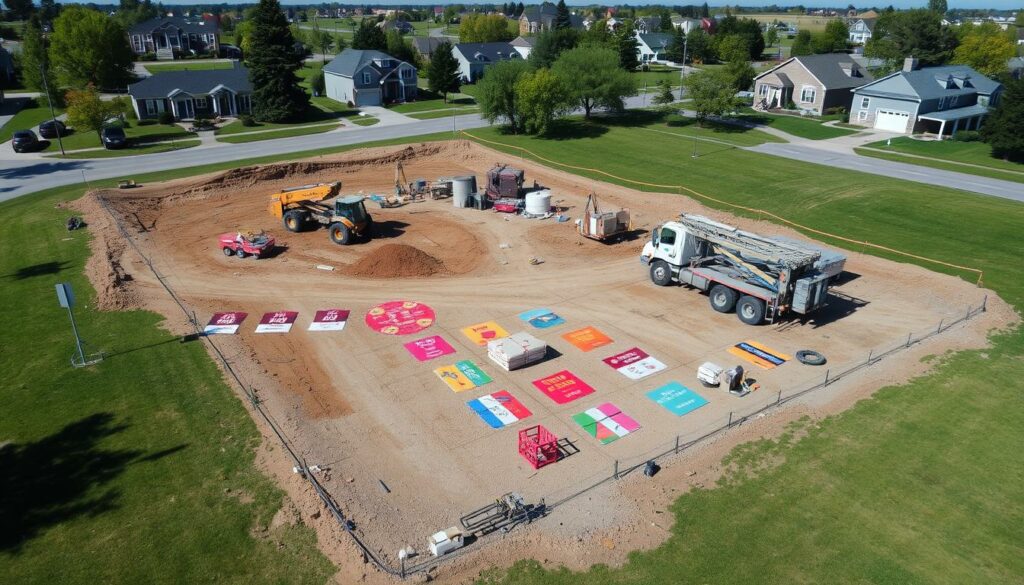
Starting a trenchless water line installation needs careful planning. Reliant Resources in Florence, Alabama, says three steps are key. These are finding existing utilities, checking soil, and knowing local rules.
Locating Existing Utilities
First, find and mark all underground utilities on your land. You need utility locating services11 to find power lines, gas pipes, and more. It’s important to avoid damaging these during the work.
Assessing Soil Conditions
The success of the installation also depends on your soil. Reliant Resources suggests a detailed soil analysis for pipe installation12. You need to check the soil’s type, moisture, and if there are roots. This helps plan the best method and avoid problems later.
Understanding Local Regulations
Finally, know the plumbing regulations in your area. You’ll need to get permits and follow building codes. Working with your contractor can help you meet these rules and avoid delays.
By taking these steps, you can prepare well for a trenchless water line installation. This makes the project go smoothly and meet all safety and legal standards.
| Preparation Considerations | Key Objectives |
|---|---|
| Locating Existing Utilities | Avoid damage to critical infrastructure during installation |
| Assessing Soil Conditions | Determine the most suitable trenchless method and anticipate challenges |
| Understanding Local Regulations | Obtain necessary permits and comply with building codes |
“Thorough preparation is the key to a successful trenchless water line installation. By addressing these critical steps, property owners can ensure a smooth and efficient process that minimizes disruptions and meets all safety and compliance standards.”
By following these steps, property owners in Florence, Alabama, can work with Reliant Resources. They can start their trenchless water line installation project with confidence and peace of mind1112.
Choosing the Right Contractor
Finding the right contractor for trenchless water line installation is key. Look for plumbers who know trenchless tech well and have done great work before13.
Importance of Experience
Experienced installers know how to handle tough jobs. They can figure out what your property needs and suggest the best solution1314.
Licensing and Insurance
Make sure your contractor is licensed and insured. Licensed installers follow the rules and protect your money15. Their insurance also covers you if something goes wrong during the job.
References and Reviews
Check out what past clients say about the contractor. Look at plumber reviews and ask for references1314. A good contractor will show you their work and what others say about them.
Choosing a skilled plumbing contractor with the right papers and good feedback means your job will go smoothly15.

Cost Factors for Trenchless Water Line
The cost of trenchless water line installation changes a lot based on several factors. Trenchless pipe bursting costs between $60 to $200 per foot. This means the total cost can be $3,500 to $20,00016. On the other hand, pipe lining for sewer line replacement costs $135 to $150 per foot. This is much less than the $1,100 to $4,400 for traditional sewer line repair16.
Average Costs Breakdown
Trenchless sewer pipe bursting costs $60 to $200 per foot16. Spray or brush lining repairs cost $280 to $285 per foot16. Traditional sewer repair costs $3,000 to $6,000 on average, or $50 to $250 per foot16.
Factors Affecting Pricing
The cost to bore a water line is $50 to $15016. Running new water lines in a house can cost $1,500 to $12,00016. Also, septic tank decommissioning and removal can cost up to $5,50016. Pipe diameter, depth, soil conditions, and preparatory work can also change the price.
Long-term Savings
Even though trenchless water line installation costs more upfront, it saves money in the long run. Trenchless sewer line repairs are about a third the cost of digging repairs17. Techniques like sectional liners, hydrojetting, and trenchless descaling are also cost-effective17. This method also saves on landscaping and makes the new pipe last longer, saving money over time.
“Trenchless methods can be 30-50% less expensive than traditional dig-and-replace techniques when considering all associated costs.”
It’s important to find a qualified contractor for trenchless work. They should own their equipment, be licensed, insured, and give a written estimate16. The contractor you choose can affect the cost of the repair, with quality matters like licensing and insurance being important1716.
Maintenance of Trenchless Water Lines
Keeping your trenchless water line in good shape is key. Use advanced camera tech for pipe inspection services. This helps spot problems early18.
Routine Inspections
Special cameras help pros check your water lines. They look for issues like tree roots, settling, or joint problems18. Catching these early saves you from big maintenance costs later.
Common Issues to Monitor
Watch out for tree roots, settling, and joint issues. These can block, leak, or damage your pipes19. Regular checks help you fix problems before they get worse.
Repair Options
Spot repairs and relining are good fixes for problems found early. These methods are cheaper and less messy than digging up your yard1819.
With a solid water line maintenance plan, your lines will last longer. This means fewer emergency repairs18.

“Regular maintenance can be the key to ensuring the long-term performance and reliability of your trenchless water line.”
Comparing Trenchless vs. Traditional Water Lines
Homeowners in Dalworthington, TX, face a choice when replacing water lines. They can pick between trenchless and traditional methods. Each has its own benefits and drawbacks, depending on the project’s needs.
Pros and Cons of Each Method
Trenchless pipe replacement is cheaper upfront20 and saves on labor costs20. It also finishes projects faster20. This method is durable and eco-friendly, lasting longer and needing fewer repairs20. It also keeps the environment safe by causing less disturbance20. But, it might not work for big pipe changes or when you need to see the whole line.
Traditional methods let you see the whole line but cost more21. They also take longer and cause more disruption21. This method can be expensive in the long run.
Situations Suited for Each Approach
Choosing between trenchless and traditional depends on several factors. Trenchless is better for hard-to-reach places, less disruption, or eco-friendliness20. Trenchless pipe technology works with many pipe types and sizes20.
Traditional methods are better for big pipe changes or detailed inspections. A professional plumber can help choose the best method for your needs.
“Trenchless pipe technology offers an innovative and sustainable solution for water line replacements, minimizing disruptions and maximizing long-term cost savings.”
| Trenchless Water Line Replacement | Traditional Water Line Replacement |
|---|---|
In conclusion, both trenchless and traditional methods have their own benefits and drawbacks. Homeowners in Dalworthington, TX, should consider their project’s needs carefully. This way, they can choose the best method for their water line replacement202122.
Common Myths about Trenchless Water Lines
Trenchless water line installation is often misunderstood. Many myths and misconceptions surround this technology. It’s important to know the truth when thinking about trenchless plumbing myths and water line replacement.
Debunking Trenchless Misconceptions
One myth is that trenchless methods cost more than traditional pipe replacement. But, they often save money in the long run. Trenchless sewer repair might cost more at first but saves money later by avoiding excavation costs23.
Another myth is that trenchless methods aren’t as durable. But, methods like pipe bursting and cured-in-place pipe can fix many problems. They can last up to fifty years, making them durable and long-lasting23.
Facts vs. Fiction
Some think trenchless methods only work for certain pipes. But, they can work for many types of pipes. Trenchless technology is often cheaper in the long run because it saves on excavation costs24.
Trenchless pipe repair causes less damage than traditional methods. It uses fewer access points, making it less visible and less invasive24.
Trenchless repair causes less disruption to landscapes than traditional methods. It uses fewer access points, making it less visible and less invasive25. It’s also more durable, meaning you won’t need to fix it as often, which is good for the environment25.
It’s wise to talk to experts to understand trenchless water line installation. Knowing the truth can help you make a better choice for your needs.
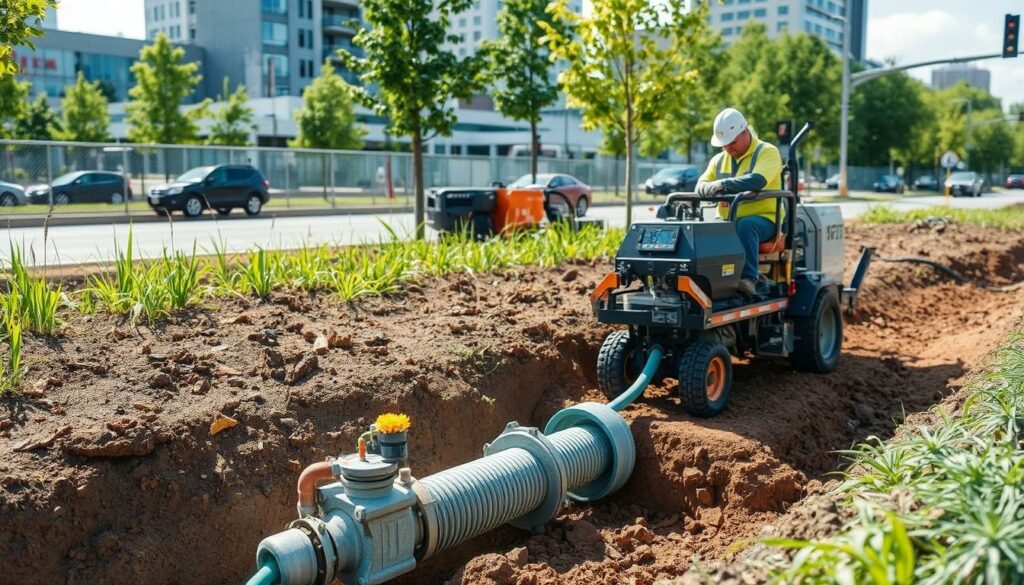
“Trenchless pipe repair is a reliable and sustainable solution that can significantly improve the longevity and efficiency of your water lines.”
Innovations in Trenchless Technology
The world of trenchless technology is always changing. New advancements are making pipe repair and water line installation better. Trenchless technology advancements are set to change how we fix underground problems.
Recent Advances in Equipment
New equipment is a big deal in trenchless technology. Now, cameras can see more clearly, helping find problems easier26. Also, new materials make pipes last longer, often over 50 years26. These changes make trenchless methods better and more reliable.
Future Trends in Water Line Installation
Experts say the future of plumbing will bring big changes. Automation and AI will make installation faster27. Robotics might change how we fix underground pipes27. The industry is also getting greener, making repairs better for the planet27.
“Trenchless technology installations are emerging as the most viable and practical option for pipeline projects in North America and worldwide.”28
As things get better, we’ll see faster, more precise, and greener solutions. Keeping up with these changes is key for making smart choices about water lines.
Conclusion: Is Trenchless Right for You?
Deciding if trenchless installation is right for your property needs careful thought. Trenchless methods have many benefits like less disruption29 and less harm to the environment29. They also offer cost-effective solutions for the long term3031. But, you must think about your pipes’ condition, the repair needed, and your property’s layout.
Assessing Your Needs
If your property has expensive landscaping or paved areas, trenchless might be perfect30. It keeps your outdoor spaces intact. Also, for big pipe replacements or complex layouts, trenchless is better than digging29.
Making an Informed Decision
For a smart choice, talk to trenchless experts. They’ll check your situation and suggest the best options293031. Think about your pipes, the project’s size, and your budget. This way, you’ll choose what’s best for your property and your wishes.
FAQ
What is a trenchless water line?
Trenchless water line installation is a new way to fix old or broken water lines. It doesn’t need digging up your yard. This method is quick and doesn’t mess up your day too much.
How does trenchless technology differ from traditional water line installation?
Trenchless tech uses small holes, not big trenches. This saves your yard and is cheaper and faster. It’s also better for the planet.
What are the benefits of trenchless water line installation?
It’s quick, saves money, and is good for the environment. It cuts down on pollution and uses less fuel.
What are the different types of trenchless methods?
There are many methods like Horizontal Directional Drilling and Pipe Bursting. Each one works best for different problems.
What is the trenchless installation process like?
First, they check and clean your pipes with cameras. Then, they put in a new pipe inside the old one. It depends on the method.
How do I prepare my property for trenchless water line installation?
Find where your utilities are, check the soil, and know the local rules. Talk to your contractor about these steps.
How do I select the right contractor for trenchless water line installation?
Choose a company with lots of experience. Make sure they are licensed and insured. Check what others say about them.
What factors affect the cost of trenchless water line installation?
The cost changes based on the pipe’s length, the method, and the job’s complexity. It might cost more upfront but saves money later.
How do I maintain trenchless water lines?
Regular checks with cameras can spot problems early. If issues are found, there are ways to fix them without digging.
What are the pros and cons of trenchless vs. traditional water line installation?
Trenchless is faster and cheaper but not for all jobs. Traditional lets you see the whole pipe but costs more and takes longer.
What are some common myths about trenchless water line installation?
Some think it’s too expensive or not durable. But, it works for many situations now.
What are the latest innovations in trenchless technology?
New cameras and materials make repairs better. Future tech might include robots and AI for even better service.
How do I determine if trenchless water line installation is right for me?
Think about your pipe’s condition, the repairs needed, your property, and your budget. Talking to experts is a good idea.
Source Links
- The Complete Guide to Trenchless Water Main Replacements: Everything You Need to Know | Bullseye Leak Detection
- Trenchless Technology: A Review of the Methods
- Benefits of Trenchless Water Line Replacement
- What Are The Benefits Of Trenchless Water Line Repair?
- 4 Amazing Benefits of Trenchless Water Line Replacements
- Benefits of Trenchless Water Line Replacement | Summit Drain
- Types of Trenchless Methods – Complete Trenchless
- 7 Types of Trenchless Rehabilitation Methods and How They Are Used
- Trenchless Pipe Repair 101: How It Works
- The Crossing Group – What is Trenchless Construction?
- Trenchless Sewer Repair Preparation – Arrow Sewer & Drain
- How to Prepare Your Property for Trenchless Pipe Lining
- Finding the Right Trenchless Contractor for Your Project
- How to Compare Different Pipe Lining Companies and Services
- 7 Tips to Choose the Right Commercial Plumbing Contractor – Accurate Leak & Line
- Trenchless Water Line Replacement Cost: Is It Worth It?
- Cost of Trenchless Sewer Repair and Replacement in Florida
- Can My Water Line Be Replaced Using The Trenchless Method? – NW Sewer
- What Is Trenchless Pipe Repair? | J&A Heating, Cooling, Plumbing, & Electrical®
- Why Is Trenchless Pipe A Good Alternative To Pipe Replacement? | Adeedo Plumbing, Drains, Heating & Air®
- Traditional Repiping Versus Trenchless Pipe Replacement
- Trenchless vs. Traditional: Municipal Water Infrastructure Repair Options Compared – Sprayroq™
- Trenchless Sewer Repair Myths Debunked — Arrow Sewer & Drain
- Debunking Myths: Truths About Trenchless Pipe Repair – Pipepoxy
- How Trenchless No-Dig Pipe Repair Minimizes Landscape Disruption – Pipe Restoration Solutions
- Innovations in Trenchless No-Dig Pipe Repair: The Latest Techniques – Pipe Restoration Solutions
- Explore the Benefits of Trenchless Technology
- Innovations and Benefits in the Trenchless Technology Industry – Civil + Structural Engineer magazine
- The Advantages of Trenchless Sewer Line Replacement | Jolly
- The Benefits of Trenchless Water Line Replacement – TTG
- What is Trenchless Sewer Line Replacement? | Costs & Benefits